
Article: Mazzucchelli Acetate: Italy's Finest Frame Material | Patek J
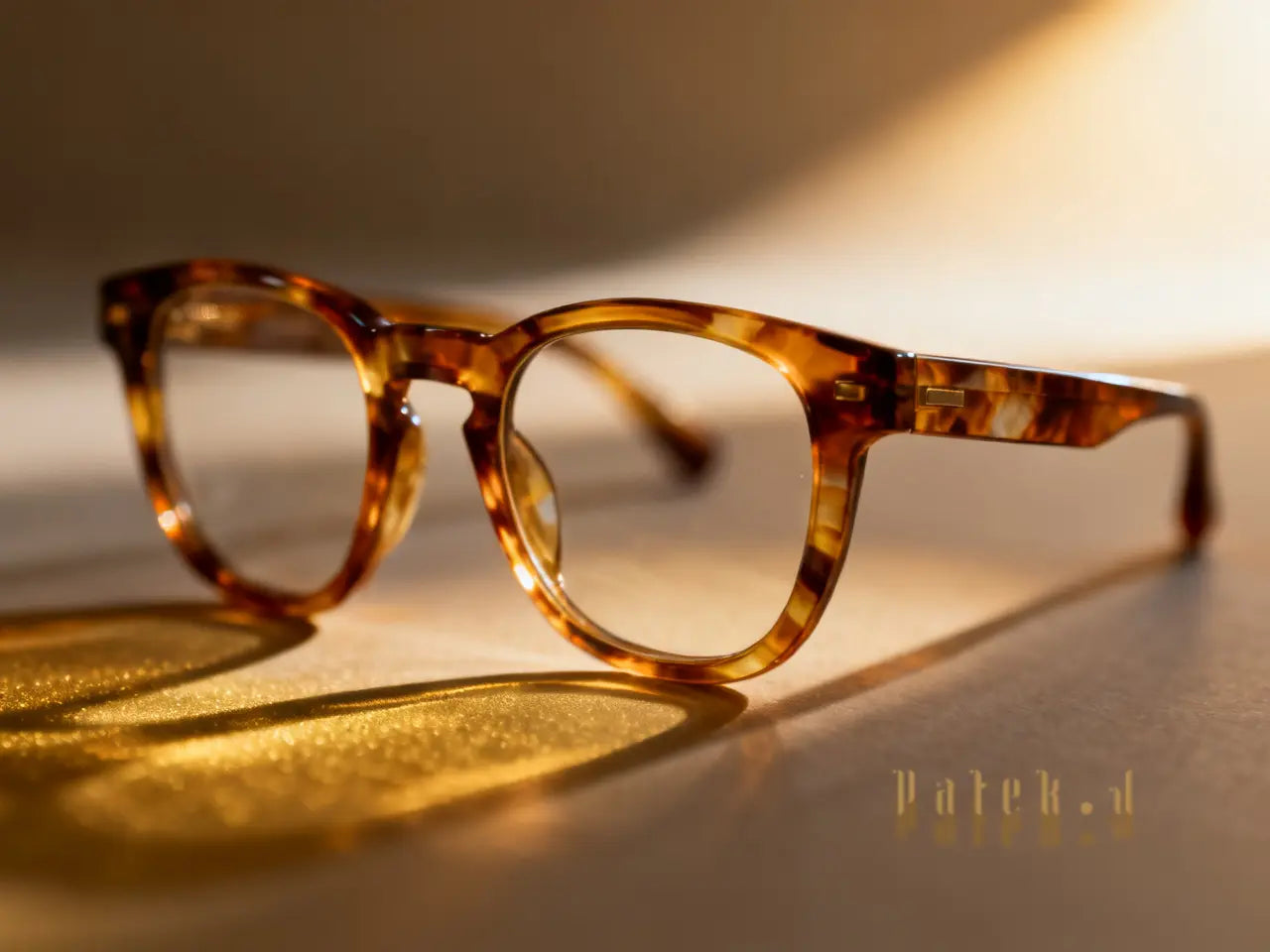
Mazzucchelli Acetate: Italy's Finest Frame Material | Patek J
Eyewear & Craftsmanship · 8 min read · By Patek.J Editorial
Written by the Patek.J team — specialists in ultra-luxury eyewear design and material sourcing, with a focus on Japanese titanium and Italian Mazzucchelli acetate craftsmanship.
Not all acetate is created equal. Behind the world's most coveted eyewear frames lies a single Italian name — Mazzucchelli — and a heritage of material excellence that has defined the luxury eyewear industry for over 175 years.
At Patek.J, our acetate frames are crafted from Mazzucchelli cellulose acetate, sourced from Castiglione Olona, Italy. This is not a default material choice. It is a deliberate one — made because no other acetate in the world delivers the depth of colour, the richness of texture, or the quality of finish that Mazzucchelli has been perfecting since 1849.
What Is Mazzucchelli Acetate?
Mazzucchelli acetate is a form of cellulose acetate — a plant-based polymer derived from cotton linters and wood pulp, not petroleum. This distinction matters both materially and philosophically. Unlike conventional plastic frames, which are injection-moulded from synthetic compounds, Mazzucchelli acetate is a natural-origin material that behaves more like a refined textile than a manufactured polymer.
The company behind it — Mazzucchelli 1849 — is a sixth-generation family business based in Castiglione Olona, in the Lombardy region of northern Italy. It is currently the world's leading manufacturer and distributor of cellulose acetate for eyewear, and has been producing the material continuously since the mid-nineteenth century. Every major luxury eyewear brand in the world sources from Mazzucchelli, or aspires to.
Founded in 1849 in Castiglione Olona, Italy, Mazzucchelli 1849 is a sixth-generation family business and the global benchmark for cellulose acetate used in luxury eyewear. Its material is derived from cotton and wood pulp — not petroleum — making it a natural-origin, plant-based polymer prized by the world's most demanding eyewear designers.
How Is Mazzucchelli Acetate Made?
The production of a single sheet of Mazzucchelli acetate is a weeks-long process that combines industrial precision with artisan judgement. It begins with raw cellulose — cotton linters processed into a base compound — to which organic colour pigments and powders are added. The compound is then fed repeatedly through heavy rollers, each pass building the colour pattern, adjusting the density, and developing the characteristic depth that distinguishes Mazzucchelli acetate from any imitation.
What makes this process remarkable is that it is not repeatable by formula alone. Each run through the rollers produces a result that is subtly unique — which is why every sheet of Mazzucchelli acetate is slightly different from the last, and why a skilled technician saves a physical sample from every batch in order to reference and approximate it in future production. The pattern is documented, but the material retains an irreducible element of the handmade.
Each sheet of Mazzucchelli acetate is a record of the process that made it — the layering of pigment, the compression of rollers, the judgement of the artisan. No two sheets are identical. This is not a flaw. It is the signature of genuine craft.
Once the sheet is formed, it undergoes a curing process that can last several weeks — a period during which the material stabilises, hardens, and develops the structural integrity that allows it to be precision-cut into frame blanks. It is then polished to a surface finish that no injection-moulded material can replicate: deep, lustrous, and warm to the touch in a way that synthetic plastics fundamentally cannot achieve.
Why Does Mazzucchelli Acetate Look Different From Other Acetate?
The visual quality of Mazzucchelli acetate is, for those who know what they are looking at, immediately recognisable. The colours have a three-dimensional depth — layers of pigment visible beneath the surface, giving the material a quality closer to precious stone than to plastic. Tortoiseshell patterns, which in synthetic materials appear flat and uniform, in Mazzucchelli acetate display the kind of natural variation and tonal complexity that made the original material so prized before its use was rightly prohibited.
This depth is a direct result of the layered production process. When colour pigment is applied in successive passes through rollers rather than mixed into a single compound, the result is stratification — visible layers of colour that catch light differently depending on the angle of view. It is what gives a Mazzucchelli acetate frame its characteristic richness, and what makes it impossible to replicate with cheaper production methods.
Beyond colour, Mazzucchelli acetate has a surface warmth that is entirely absent from synthetic alternatives. It is the difference between holding a piece of handmade Italian leather and holding a vinyl substitute — recognisable immediately through touch, before any visual inspection is made.
Is Mazzucchelli Acetate Comfortable to Wear?
Comfort in acetate eyewear is determined by three factors: weight, hypoallergenic properties, and adjustability. Mazzucchelli acetate performs exceptionally across all three.
As a cellulose-based material, it is fully hypoallergenic — free of the petroleum compounds and synthetic additives that cause reactions in sensitive wearers. It is also lightweight relative to its visual density, meaning that a frame which appears substantial and luxurious in the hand will sit comfortably on the face for extended wear without fatigue.
Acetate frames are also uniquely adjustable. When gently heated, the material becomes malleable — allowing an experienced optician to reshape temples, adjust nose bridge geometry, and achieve a fit that is precisely calibrated to the individual wearer's face. This level of personalisation is simply not possible with injection-moulded plastic, which cannot be reshaped without risk of damage. A Mazzucchelli acetate frame, properly fitted, becomes — over time — a frame fitted to you specifically.
Why Do Luxury Eyewear Brands Choose Mazzucchelli?
The answer is straightforward: because no other acetate manufacturer has matched Mazzucchelli's combination of material quality, colour range, and production consistency at the level the luxury market demands. The company's position in the industry is not the result of marketing — it is the result of 175 years of singular focus on a single material, refined continuously by six generations of the same family.
When a luxury eyewear brand specifies Mazzucchelli acetate, it is making a statement to the people who know — that the frame in their hands was made with the finest available material, processed through one of the most demanding production systems in the industry, and finished to a standard that will be visible and tangible every time the frame is worn.
For Patek.J, this is the only acetate that is consistent with what we stand for. Our acetate frames carry the depth, the colour, and the material integrity of Mazzucchelli — because our clients deserve nothing less, and because we are not willing to compromise on the detail that most people will never notice but will always feel.
Mazzucchelli Acetate vs. Standard Acetate: What Is the Difference?
Standard acetate frames — used by the vast majority of mid-market eyewear — are typically produced from injection-moulded cellulose propionate or synthetic plastic compounds. These materials are faster and cheaper to produce, but they lack the colour depth, surface quality, and structural character of genuine cellulose acetate. The difference is visible under any light source: standard acetate appears flat and uniform; Mazzucchelli acetate has visible internal complexity.
There is also a durability distinction. Mazzucchelli acetate, properly cared for, resists fading, surface degradation, and brittleness over years of wear. Standard synthetic alternatives are more susceptible to UV discolouration, surface scratching, and the kind of structural fatigue that causes frames to lose their shape and tension over time. The investment in Mazzucchelli acetate is, in this sense, an investment in longevity — both of the material and of the frame's aesthetic integrity.
Frequently Asked Questions About Mazzucchelli Acetate
What is Mazzucchelli acetate made from?
Mazzucchelli acetate is a cellulose acetate — a natural-origin polymer derived from cotton linters and wood pulp. It is not a petroleum-based plastic. Organic colour pigments are added during production and applied through a weeks-long layering process involving repeated passes through heavy rollers, producing the material's characteristic colour depth and visual complexity.
How long has Mazzucchelli been making acetate?
Mazzucchelli 1849 was founded in Castiglione Olona, Italy, in 1849 — originally producing combs and fashion accessories from natural materials. The company transitioned to cellulose acetate production in the twentieth century and has been the global benchmark for eyewear acetate ever since. It is currently run by the sixth generation of the founding family.
Is Mazzucchelli acetate hypoallergenic?
Yes. Cellulose acetate is derived from plant-based materials and contains none of the synthetic compounds or petroleum derivatives that cause skin reactions in sensitive wearers. Mazzucchelli acetate is considered safe for extended skin contact and is routinely recommended for wearers with known sensitivities to synthetic frame materials.
Can Mazzucchelli acetate frames be adjusted?
Yes — this is one of acetate's most practical advantages over other frame materials. When gently heated, Mazzucchelli acetate becomes malleable and can be reshaped by an experienced optician to achieve a precise, personalised fit. The material retains its new shape once cooled, allowing adjustments that are both accurate and durable.
Why does Mazzucchelli acetate look different from other acetate?
The visual depth of Mazzucchelli acetate is the result of its layered production process. Colour pigments are applied in successive passes through rollers rather than mixed into a single compound, creating visible stratification within the material. This internal complexity — layers of colour that catch light differently depending on viewing angle — gives Mazzucchelli acetate a three-dimensional richness that flat-mixed synthetic materials cannot replicate.
How do I care for Mazzucchelli acetate frames?
Mazzucchelli acetate frames should be cleaned with a soft microfibre cloth and lens-safe cleaning solution. Avoid prolonged exposure to extreme heat — such as leaving frames in a car in direct sunlight — as sustained high temperatures can cause the material to warp. Store frames in a protective case when not in use. With proper care, Mazzucchelli acetate frames maintain their colour, surface finish, and structural integrity for many years.
How is Mazzucchelli acetate different from standard plastic frames?
Standard mid-market frames are typically produced from injection-moulded cellulose propionate or synthetic plastic compounds — materials that are faster and cheaper to produce but lack the colour depth, warmth, and structural integrity of genuine cellulose acetate. The difference is visible under any light: standard acetate appears flat and uniform; Mazzucchelli acetate displays visible internal layering and tonal complexity.
Is Mazzucchelli acetate sustainable?
Relative to petroleum-based plastics, yes. Mazzucchelli acetate is derived from renewable plant-based sources — cotton and wood pulp — rather than fossil fuel compounds. The company has also developed recycled acetate lines produced from production offcuts, reducing material waste. For a natural-origin material, its production footprint is significantly lower than synthetic alternatives.
What is the difference between cellulose acetate and cellulose propionate?
Both are acetate-based materials, but cellulose acetate — Mazzucchelli's primary material — is the higher-quality of the two. Cellulose propionate is lighter and more flexible, making it suitable for sports or children's eyewear, but it lacks the colour richness, surface depth, and prestige association of cellulose acetate. Luxury eyewear brands almost universally specify cellulose acetate for their premium lines.
Why do luxury eyewear brands specifically use Mazzucchelli and not other acetate suppliers?
Mazzucchelli's position in the luxury eyewear market is the result of 175 years of singular focus on a single material. No other supplier has matched its colour range — which runs to thousands of unique patterns and hues — its production consistency, or its material quality at the level the luxury segment demands. When a brand specifies Mazzucchelli, it signals to those who know that the material in their hands is the finest available in the category.
Find Patek.J in Riyadh
Our Mazzucchelli acetate frames are available exclusively through authorised optical retailers in Riyadh, Saudi Arabia. Visit our Authorized Retailers page to find a location near you, or contact us for more information about our collections.



Leave a comment
This site is protected by hCaptcha and the hCaptcha Privacy Policy and Terms of Service apply.