
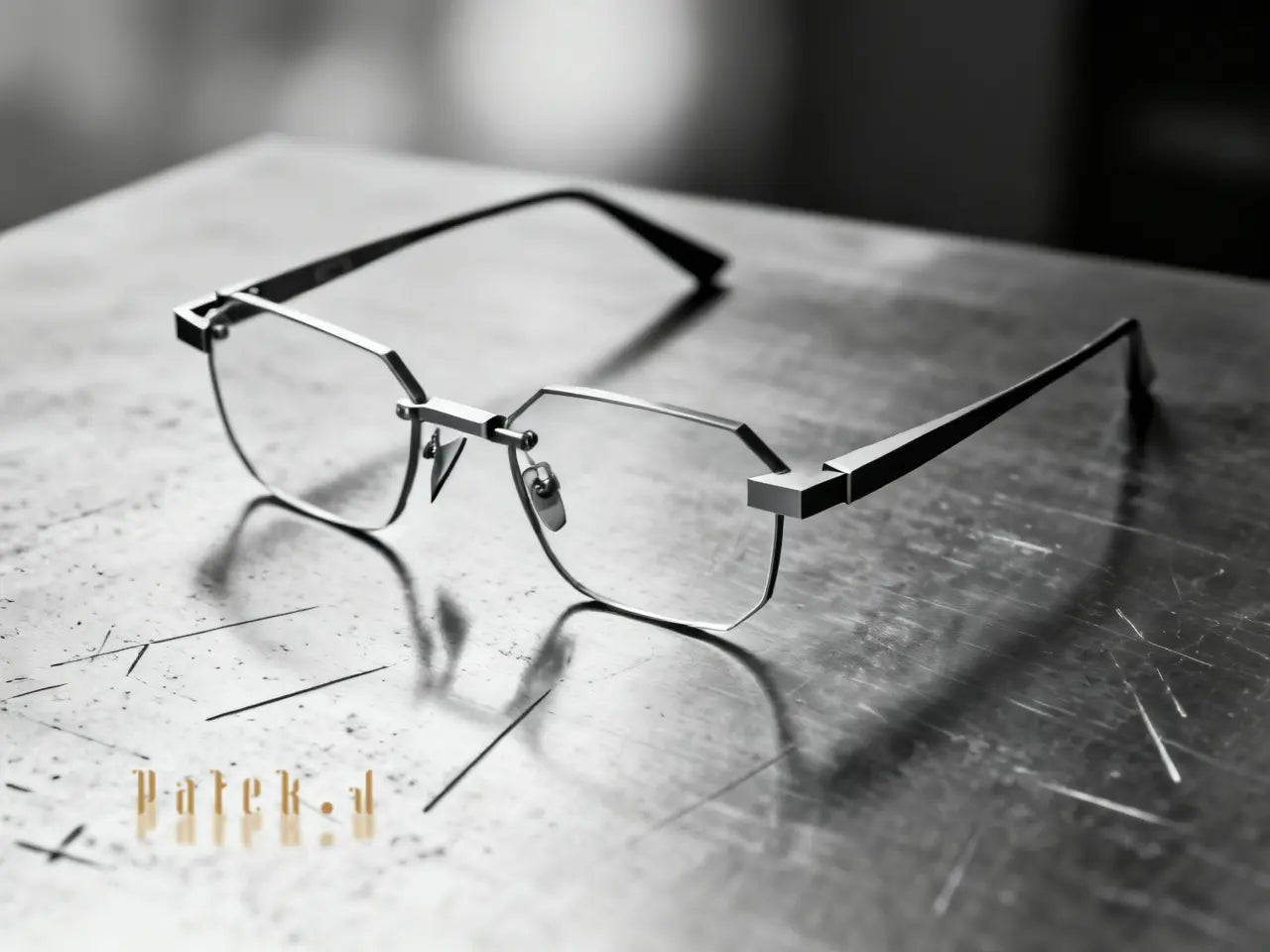
Why Japanese Titanium Is the Gold Standard for Luxury Eyewear
Eyewear & Craftsmanship · 8 min read · By Patek.J Editorial
Written by the Patek.J team — specialists in ultra-luxury eyewear design and material sourcing, with a focus on Japanese titanium and Italian craftsmanship.
In a world saturated with eyewear, only a handful of materials earn the right to be called exceptional. Japanese titanium is one of them — and for those who understand the difference between wearing a frame and wearing a statement, it is the only one that truly matters.
At Patek.J, our frames are built on a foundation of Japanese titanium. This is not a marketing claim. It is a commitment — to precision, to longevity, and to the kind of quiet authority that defines genuine luxury.
Where Does Japanese Titanium Come From?
Japan's mastery of titanium in eyewear traces directly to Sabae, a city in Fukui Prefecture that produces over 90% of Japan's eyewear output. Sabae's relationship with eyewear manufacturing began in the early twentieth century, but it was the introduction of titanium frames in the early 1980s that elevated the region to a position of global authority it has held ever since.
What distinguishes Sabae is not simply a manufacturing infrastructure — it is a culture. Artisans there spent decades developing the specialised tools, proprietary alloys, and technical processes needed to work with titanium: a material so resistant to conventional shaping methods that the entire industry had to reinvent its approach from scratch. The result is a craft tradition with no meaningful equivalent anywhere else in the world.
Sabae, Fukui Prefecture produces approximately 90% of Japan's eyewear and introduced the first commercially viable lightweight titanium eyewear frames in the early 1980s — establishing a manufacturing standard that the global luxury industry has been trying to match ever since.
What Makes Japanese Titanium Technically Superior?
Titanium's raw properties are well established in materials science: it is approximately 45% lighter than steel while offering comparable tensile strength. It is fully biocompatible, corrosion-resistant, and maintains dimensional stability across extreme temperature variation. These properties alone make it a compelling choice for eyewear.
But the distinction between Japanese titanium and generic titanium lies in the grade and the process. The highest-performing Japanese frames use beta-titanium (β-Ti) — a specific alloy composition that adds superior spring memory and flexibility to titanium's innate strength. Beta-titanium bends without fracturing and returns to its original geometry precisely. It is the reason a well-fitted Japanese frame retains its adjustment after years of daily wear.
A well-made titanium frame does not just last for years. It lasts for decades — and it looks as precise on the thousandth wear as it did on the first.
Beyond the alloy itself, Japanese manufacturers apply surface treatments, hinge tolerances, and nose pad engineering that are simply not available through lower-cost production routes. The finishing of a Sabae frame is measured in microns. That level of precision is not achievable through automation alone — it demands the kind of accumulated human expertise that takes generations to develop.
How Are Japanese Titanium Frames Made?
The production of a single Japanese titanium eyewear frame can involve over 200 individual manufacturing steps — a figure that reflects not inefficiency, but intentionality. Each step represents a decision: to hand-finish a surface rather than machine it, to test a hinge at multiple tension points rather than a single threshold, to inspect every component against a standard that most manufacturers would consider excessive.
This approach is rooted in the Japanese concept of monozukuri — literally, "the art and science of making things." Monozukuri is not a production philosophy in the conventional sense. It is a cultural orientation toward craft: the belief that the act of making something is itself meaningful, and that the standard of that making reflects on the maker's character. It is why Sabae artisans inspect by hand what machines have already verified mechanically. The machine confirms; the artisan certifies.
For Patek.J, this process is non-negotiable. Our frames pass through the hands of craftspeople who have spent careers developing sensitivity to the material — who can feel a hinge that is two microns out of tolerance, and who understand that this difference, invisible to any instrument, will eventually be felt by the person who wears the frame every day.
What Does It Feel Like to Wear Japanese Titanium?
Luxury, at its most essential, is felt. And nothing communicates the quality of a frame more immediately than the moment it rests on your face for the first time.
Japanese titanium frames are extraordinarily light — typically between 10 and 20 grams for a complete frame, compared to 25–35 grams for standard metal alternatives. Many wearers describe the experience as wearing nothing at all. Yet beneath that lightness is a structural integrity that heavier materials cannot match. The frame moves with you. It adapts to the subtle pressure points of your face. It does not shift, pinch, or fatigue over the course of a long day.
The hypoallergenic nature of titanium — free of nickel and other common skin irritants — means that this comfort extends to skin contact as well. Wearers who have experienced reactions to standard metal frames consistently find that titanium eliminates the problem entirely, without requiring any compromise in the aesthetic or structural quality of the frame.
Is Japanese Titanium Worth the Investment?
The question of value in luxury eyewear is rarely about price per unit. It is about cost per year of use — and on that measure, Japanese titanium frames are among the most rational purchases available in the category.
A frame that maintains its fit, finish, and integrity for ten to fifteen years represents a fundamentally different proposition from one that requires replacement every two to three. Beyond the practical calculation, there is the question of what the frame communicates about its wearer: not the logo on the temple, but the material in the hand, the weight on the face, and the precision of every hinge and junction.
There is a particular kind of luxury that does not announce itself loudly. It does not rely on visible branding or ostentatious detail. It speaks in the language of materials, proportion, and craft — and it is understood immediately by those who know. Japanese titanium has become the defining material of this restrained prestige. It is the choice of collectors, of connoisseurs, of individuals for whom eyewear is not an accessory but an expression of considered taste.
Why Patek.J Chooses Japanese Titanium
We had a choice in how we built Patek.J. We could have sourced materials that were less demanding to work with, less costly to procure, and more forgiving in production. We chose not to.
Japanese titanium represents everything Patek.J stands for: precision over convenience, longevity over trend, and craftsmanship over compromise. When you wear a Patek.J frame, you carry with it the accumulated knowledge of Japanese artisans who have spent lifetimes perfecting their technique — and the commitment of a brand that refuses to accept anything less.
This is not the gold standard because we say it is. It is the gold standard because the material, the process, and the philosophy behind it have earned that distinction — one frame at a time.
Frequently Asked Questions About Japanese Titanium Eyewear
What makes Japanese titanium different from regular titanium?
Japanese titanium — particularly beta-titanium sourced from Sabae, Fukui Prefecture — is processed to a higher purity grade and shaped with micro-level precision that standard titanium manufacturing cannot match. The difference lies not just in the material itself, but in the craftsmanship applied to it: tighter tolerances, superior hinge engineering, and a finishing standard measured in microns rather than millimetres.
Why is Sabae, Japan considered the eyewear capital of the world?
Sabae in Fukui Prefecture produces over 90% of Japan's eyewear and has been the global benchmark for precision frame manufacturing since the early 1980s. The region introduced lightweight titanium eyewear to the world, and its artisans have spent decades refining techniques that combine industrial precision with hand-finishing traditions found nowhere else.
How long do Japanese titanium frames last?
A well-made Japanese titanium frame, properly cared for, will last decades without losing its shape, finish, or structural integrity. Unlike lesser alloys that develop micro-fatigue over time, titanium maintains its form under repeated stress — making it one of the few eyewear materials that genuinely improves as an investment over time.
Is titanium eyewear suitable for people with sensitive skin?
Yes. Titanium is fully hypoallergenic and biocompatible — it contains no nickel, which is the most common cause of skin reactions from metal eyewear. This makes Japanese titanium frames an ideal choice for anyone with sensitive skin or known metal allergies, without any compromise on quality or aesthetics.
How heavy are Japanese titanium frames?
Japanese titanium frames typically weigh between 10 and 20 grams for a complete frame — roughly half the weight of standard metal alternatives. This is a result of both titanium's natural properties and the Japanese manufacturing approach, which eliminates unnecessary mass at every stage of production. Many wearers describe the experience as wearing nothing at all.
What is beta-titanium and why is it used in luxury eyewear?
Beta-titanium (β-Ti) is a specific alloy of titanium prized for its superior flexibility and spring memory — it bends without breaking and returns to its original shape. This makes it ideal for temples and hinges that need to withstand daily wear while maintaining a precise fit. It is the material of choice for the most demanding luxury eyewear manufacturers in Japan.
How do I know if a frame is genuine Japanese titanium?
Authentic Japanese titanium frames typically carry markings such as "Titanium," "β-Ti," or "Made in Japan" engraved on the temple. Beyond markings, the weight, hinge tension, and surface finish of genuine Japanese frames are noticeably different from imitations — a quality that becomes immediately apparent when held alongside lesser alternatives.
Can titanium frames be adjusted by an optician?
Yes, though titanium requires experienced handling. Because of its strength and spring memory, adjustments need to be made carefully and with appropriate tools. Most qualified opticians are familiar with titanium frames, and a well-made Japanese frame will hold any adjustment made to it far more reliably than frames made from standard alloys.
What is the difference between titanium and acetate eyewear?
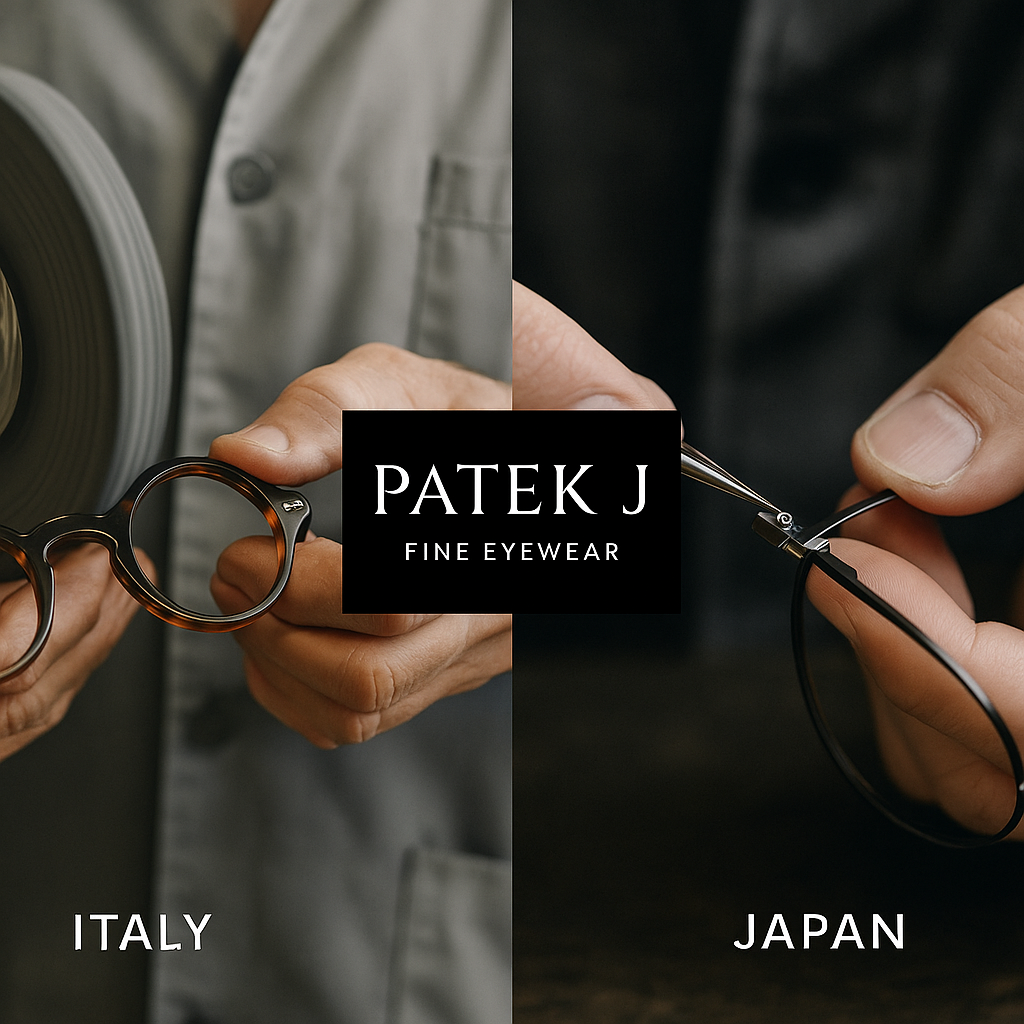
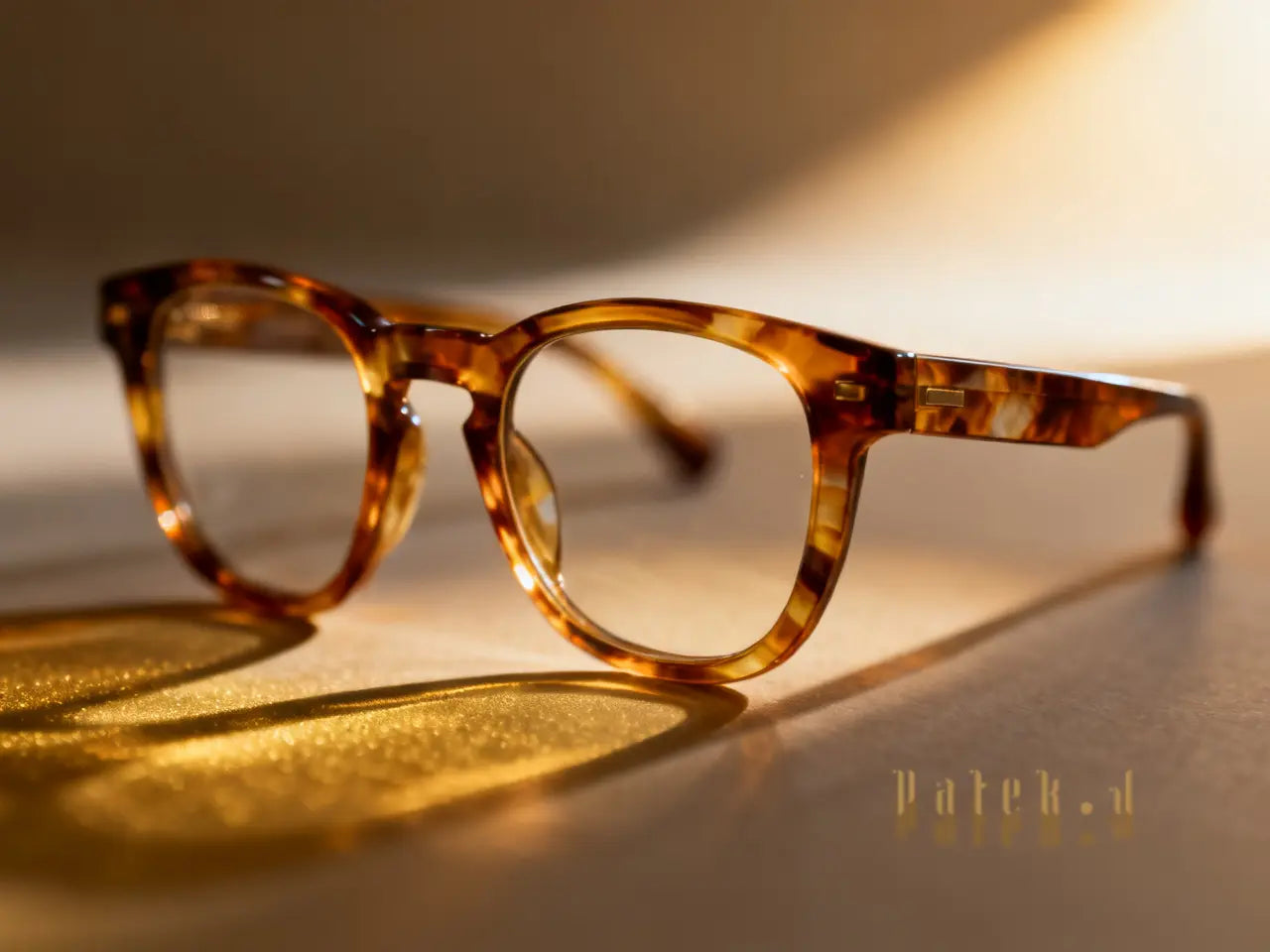
Titanium and acetate serve different aesthetic and functional roles. Titanium offers unmatched lightness, strength, and hypoallergenic properties — it is the engineering choice. Acetate, particularly Italian Mazzucchelli acetate, offers richness of colour, depth of pattern, and a warm material presence that titanium cannot replicate. The most considered eyewear collections — including Patek.J — use both, each for what it does best.
Why do luxury eyewear brands specifically source titanium from Japan?
Japan's titanium eyewear industry is built on decades of accumulated expertise that no other manufacturing region has replicated at the same level. The combination of high-purity material sourcing, proprietary processing techniques, and a cultural commitment to monozukuri — the philosophy of making things with purpose and mastery — produces a result that is measurably superior. For a brand like Patek.J, sourcing from Japan is not a positioning decision. It is a quality decision.
Find Patek.J in Riyadh
Our Japanese titanium frames are available exclusively through authorised optical retailers in Riyadh, Saudi Arabia. Visit our Authorized Retailers page to find a location near you, or contact us for more information about our collections.



Leave a comment
This site is protected by hCaptcha and the hCaptcha Privacy Policy and Terms of Service apply.